

Why Preventive Maintenance Matters for Liquid Handler Automation
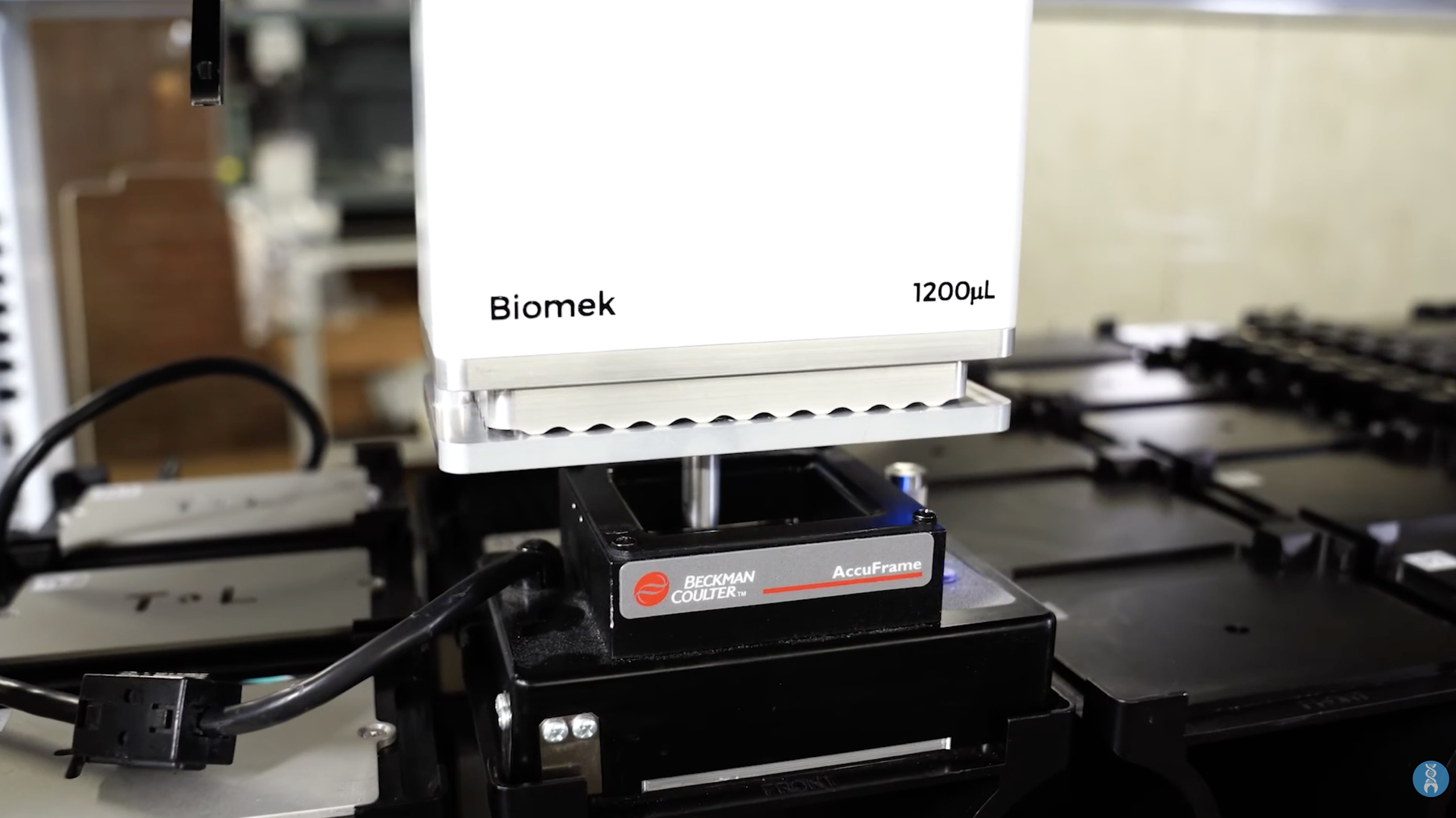
Liquid handlers are at the core of many modern laboratory workflows. They support consistency, speed, and accuracy at a scale that manual processes simply can’t match. But that reliability depends on something that’s often easy to delay or deprioritize: preventive maintenance.
Unlike sudden failures, most issues with liquid handling systems develop slowly. Components wear. Alignments drift. Small variances compound over time. Preventive maintenance is how labs stay ahead of those problems instead of reacting to them after workflows are already disrupted.
Below are three key reasons preventive maintenance is so important for liquid handler lab automation instruments.
Accuracy Degrades Long Before a Failure Occurs
Liquid handlers rarely fail all at once. More often, performance declines gradually.
Worn seals, aging tubing, misaligned pipetting heads, or a buildup in fluid paths can all affect dispense accuracy without triggering obvious alarms. The instrument may still run, but results may become less consistent or harder to reproduce.
Preventive maintenance focuses on:
Inspecting wear on components before they fail
Verifying alignment and calibration
Identifying early signs of drift or mechanical stress
By addressing these issues early, labs protect data integrity and reduce the risk of repeating experiments or troubleshooting results that don’t make sense after the fact.
Preventive Maintenance Extends Equipment Lifespan
Liquid handlers are long-term investments. With proper care, many systems can remain productive well beyond their original expected lifespan.
Preventive maintenance supports longevity by:
Reducing stress on motors, drives, and mechanical assemblies
Preventing minor issues from cascading into major failures
Keeping systems operating efficiently rather than compensating for worn parts
For labs facing uncertain capital budgets, extending the usable life of existing automation can be just as valuable as acquiring new instruments.
Downtime Is More Disruptive Than the Repair Itself
When a liquid handler goes down unexpectedly, the impact often extends beyond the instrument.
Unplanned downtime can:
Stop automated workflows mid-run
Delay downstream processes
Pull skilled staff away from planned work to troubleshoot or reshcedule
Breakdows also tend to happen at the worst possible time, justing peak workloads or critical project phases.
Preventive maintenance helps reduce the surprises by replacing parts on a planned schedule, identifying risks early, and keeping the systems operating within spec. Even when repairs are needed, they’re more likely to be predictable, scoped, and easier to plan around.
Preventive Maintenance Is About Control
At it’s core, preventive maintenance gives labs more control:
Control over uptime
Control over data quality
Control over service costs
Rather than reacting to failures, labs can plan maintenance around their schedules, workloads, and priorities. Whether preventive maintenance is handled through service agreement or scheduled service visits, the goal is the same: keep liquid handlers reliable, accurate, and ready to support the work that depends on them.
For labs that rely heavily on automation, preventive maintenance isn’t an extra. It’s part of operating responsibly and sustainably.